

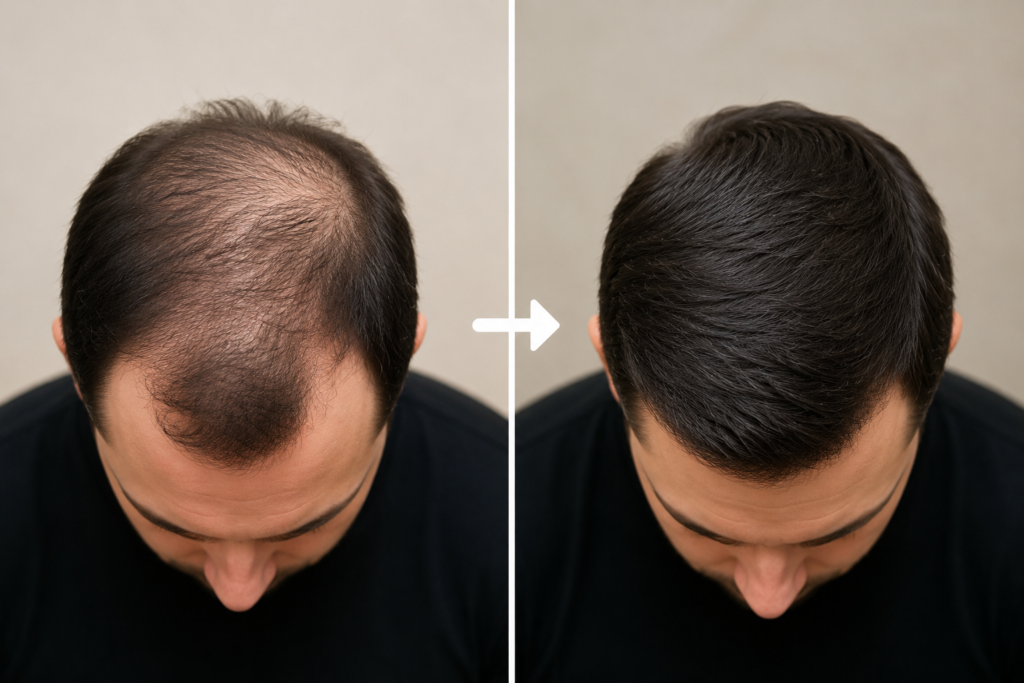
Did you know that nearly 85% of men experience noticeable hair thinning by the age of 50? For many, it starts earlier — a little extra hair on the pillow, a widening part, or a receding hairline that seems impossible to ignore. If you’ve been searching for the best thinning hair treatment for men, you’re not alone. Male hair thinning is one of the most common grooming and confidence-related concerns worldwide, yet many men still misunderstand its causes and the most effective solutions available today.
The good news? Hair thinning doesn’t happen overnight, and with the right strategy, many men can slow, stop, or even reverse the process. From scalp care and nutrition to clinically supported treatments and lifestyle changes, this guide breaks down everything you need to know in a practical and easy-to-follow format.
Whether your thinning hair is caused by genetics, stress, poor nutrition, hormonal imbalance, or harsh hair products, this article will help you identify the root cause and discover realistic, science-backed solutions that actually work.
Ingredients List
Think of your hair recovery plan like a recipe: the right “ingredients” can dramatically improve your results. Here are the essential components of an effective thinning hair treatment for men routine.
Essential Ingredients for Healthier Hair
- Biotin (Vitamin B7)
Supports keratin production and strengthens hair strands. - Protein-Rich Foods
Hair is primarily made of protein, so lean meats, eggs, fish, and legumes are critical. - Minoxidil
One of the most researched topical treatments for male hair thinning. - DHT-Blocking Ingredients
Saw palmetto, pumpkin seed oil, and caffeine shampoos may help reduce hair follicle shrinkage. - Scalp-Stimulating Oils
Rosemary oil and peppermint oil can improve circulation and scalp health. - Zinc & Iron
Deficiencies in these minerals are commonly linked to hair shedding. - Gentle Sulfate-Free Shampoo
Helps protect fragile hair from unnecessary breakage.
Potential Substitutions
- Replace harsh styling gels with lightweight volumizing mousse.
- Swap cotton pillowcases for silk pillowcases to reduce friction.
- Use natural oils instead of alcohol-heavy hair tonics.
These ingredients work best when combined consistently rather than used individually.
Timing
Hair recovery requires patience and consistency. Here’s a realistic timeline:
| Stage | Estimated Time |
| Initial scalp improvement | 2–4 weeks |
| Reduced hair shedding | 1–2 months |
| Visible thickening | 3–6 months |
| Maximum noticeable results | 6–12 months |
Interestingly, studies show that men who follow a consistent hair care routine for six months are significantly more likely to maintain hair density compared to those who frequently switch products.
Quick Comparison
- Most men expect results in 30 days.
- Realistic hair regrowth timelines often require 90–180 days.
- Clinical treatments like minoxidil typically show best results after 4 months of continuous use.
Consistency matters more than perfection.
Step-by-Step Instructions
Step 1: Identify the Cause of Hair Thinning
Before choosing a treatment, determine what’s triggering your hair loss.
Common causes include:
- Genetics (male pattern baldness)
- Stress and anxiety
- Nutritional deficiencies
- Poor scalp hygiene
- Hormonal changes
- Excessive heat styling
- Tight hairstyles
A dermatologist or hair specialist can help diagnose the exact issue.
Step 2: Upgrade Your Hair Care Routine
Many men unknowingly damage their hair daily.
To improve scalp and hair health:
- Wash hair 2–3 times weekly with a gentle shampoo.
- Avoid extremely hot water.
- Pat hair dry instead of rubbing aggressively.
- Limit hair waxes with heavy alcohol content.
A healthier scalp creates a stronger environment for hair growth.
Step 3: Start a Proven Thinning Hair Treatment for Men
Evidence-based options include:
- Topical minoxidil
- Low-level laser therapy
- DHT-blocking shampoos
- Prescription treatments recommended by professionals
Consistency is essential. Skipping applications frequently reduces effectiveness.
Step 4: Improve Your Nutrition
Hair follicles are highly sensitive to nutrient deficiencies.
Focus on foods rich in:
- Omega-3 fatty acids
- Vitamin D
- Iron
- Zinc
- Protein
Hydration also matters. Dehydration can weaken hair structure and increase brittleness.
Step 5: Reduce Stress Levels
Stress-related hair loss is more common than many people realize.
Helpful strategies include:
- Better sleep quality
- Regular exercise
- Meditation
- Reduced screen time before bed
- Balanced work-life routines
Chronic stress increases cortisol levels, which may disrupt normal hair growth cycles.
Step 6: Protect Existing Hair
Protecting your current hair is just as important as regrowing new hair.
Avoid:
- Tight hats for extended periods
- Excessive blow drying
- Chemical bleaching
- Daily straightening
Small daily habits can make a noticeable difference over time.
Nutritional Information
Healthy hair growth starts internally. Here’s a breakdown of nutrients commonly associated with stronger hair:
| Nutrient | Benefit for Hair |
| Biotin | Strengthens keratin structure |
| Protein | Supports hair shaft growth |
| Iron | Improves oxygen delivery to follicles |
| Zinc | Helps tissue growth and repair |
| Vitamin D | Supports follicle cycling |
| Omega-3 | Reduces inflammation |
Recommended Daily Focus
- Protein: 50–70g
- Water: 2–3 liters
- Iron-rich foods: spinach, red meat, lentils
- Healthy fats: salmon, walnuts, avocado
Studies suggest that nutritional deficiencies are a contributing factor in many cases of diffuse hair thinning among men under 35.
Healthier Alternatives for the Recipe
If you want a more natural approach to thinning hair treatment for men, there are several alternatives worth considering.
Natural Alternatives
- Rosemary oil scalp massages
- Aloe vera scalp treatments
- Green tea rinses
- Pumpkin seed oil supplements
Lifestyle-Based Improvements
- Switch from smoking to nicotine-free habits
- Reduce processed sugar intake
- Prioritize deep sleep recovery
- Increase physical activity
Scalp-Friendly Product Swaps
Instead of:
- Sulfate-heavy shampoos
Try:
- Natural caffeine shampoos
- Tea tree oil cleansers
- Biotin-infused conditioners
Natural methods often work best when combined with medical or dermatologist-approved treatments.
Serving Suggestions
Here’s how to maximize your hair care results in daily life:
Morning Routine
- Use lightweight volumizing products.
- Avoid greasy pomades that flatten thinning hair.
- Style hair with a matte finish for fuller appearance.
Evening Routine
- Gentle scalp massage for 5 minutes.
- Apply topical treatments consistently.
- Sleep on silk pillowcases.
Haircut Suggestions
Some hairstyles can make thinning hair appear fuller:
- Textured crop
- Buzz cut
- Short fade
- Messy layered style
A professional barber can recommend cuts tailored to your hair density and face shape.
Common Mistakes to Avoid
Many men accidentally worsen hair thinning without realizing it.
Mistake #1: Waiting Too Long
Hair thinning treatments are most effective during the early stages.
Mistake #2: Switching Products Too Quickly
Hair growth cycles take time. Constantly changing treatments prevents proper evaluation.
Mistake #3: Overwashing the Hair
Excessive washing strips natural oils and irritates the scalp.
Mistake #4: Ignoring Nutrition
Expensive products won’t compensate for poor diet and lack of sleep.
Mistake #5: Using Harsh Styling Products
Alcohol-heavy sprays and gels may increase breakage.
Mistake #6: Expecting Overnight Results
Most clinically proven treatments require at least 3–6 months for visible improvement.
Patience is part of the process.
Storing Tips for the Recipe
Think of your hair care products like ingredients that need proper storage for maximum effectiveness.
Best Practices
- Store oils in cool, dark places.
- Keep shampoos tightly sealed.
- Avoid leaving products in hot bathrooms.
- Replace expired topical treatments promptly.
Prep-Ahead Tips
- Meal prep protein-rich foods weekly.
- Schedule consistent scalp treatments.
- Set reminders for daily applications.
Consistency improves long-term success rates significantly.
Conclusion
Hair thinning can feel frustrating, but the right thinning hair treatment for men can help restore confidence and improve hair health over time. Focus on consistency, nutrition, scalp care, and evidence-based treatments. Try these strategies today, share your experience in the comments, and subscribe for more expert grooming and wellness tips.
FAQs
What is the best thinning hair treatment for men?
The most effective treatments often include minoxidil, DHT blockers, scalp care, and nutritional improvements. The best option depends on the cause of the hair thinning.
Can thinning hair grow back naturally?
In some cases, yes. Stress-related or nutrition-related thinning may improve with healthier habits and proper care.
How long does it take to see results?
Most men notice reduced shedding within 1–2 months and visible improvements after 3–6 months.
Does stress cause hair thinning?
Yes. Chronic stress can disrupt hair growth cycles and increase shedding.
Are natural remedies effective?
Natural remedies like rosemary oil and scalp massage may support hair health, especially when combined with clinically proven treatments.
Should I see a dermatologist for thinning hair?
Yes. A professional evaluation can identify underlying causes such as hormonal imbalance, deficiencies, or genetic hair loss.
Can shampoo alone stop hair thinning?
Usually not. Shampoo helps support scalp health, but effective hair recovery often requires a broader treatment plan.
Which vitamins help male hair growth?
Biotin, Vitamin D, Iron, Zinc, and Omega-3 fatty acids are commonly associated with healthier hair growth.
Click here to explore the best thinning hair treatment for men.