

Anxiety can make falling asleep feel impossible. Your body feels tired, but your mind keeps racing with thoughts, stress, and worries. If you often lie awake at night overthinking everything, you are not alone.
The good news is that there are natural and effective ways to calm anxiety before bed and improve sleep quality without depending on unhealthy habits.
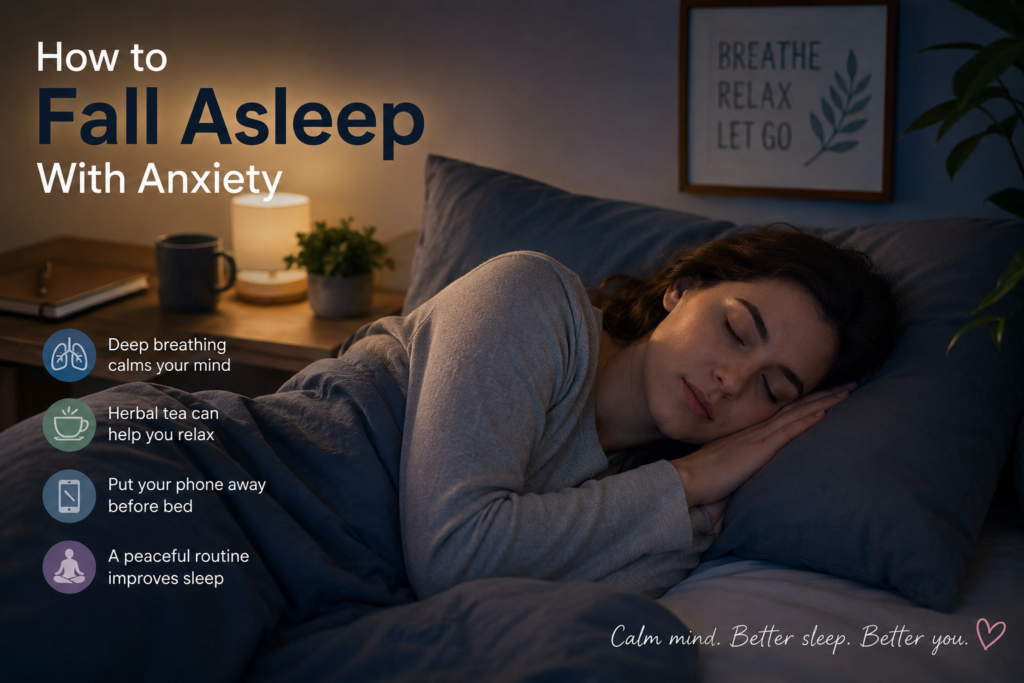
Why Anxiety Makes It Hard to Sleep
Anxiety activates your body’s stress response. This increases alertness, raises your heart rate, and makes your brain stay active even when you want to rest.
Common signs of anxiety-related sleep problems include:
- Racing thoughts at bedtime
- Waking up around 3 AM
- Feeling restless in bed
- Muscle tension
- Fast heartbeat at night
- Difficulty staying asleep
- Feeling tired after waking up
Many people searching for how to fall asleep with anxiety experience these symptoms regularly.
1. Stop Using Your Phone Before Bed
Blue light from phones can interfere with melatonin production and keep your brain stimulated.
Try to avoid:
- Social media scrolling
- Stressful videos or news
- Bright screens at night
Instead, create a relaxing nighttime routine for better sleep.
- Reading a book
- Listening to calming music
- Drinking herbal tea
- Deep breathing exercises
2. Try Deep Breathing for Anxiety and Sleep
Deep breathing helps calm the nervous system and reduce nighttime anxiety.
One simple technique is the 4-7-8 breathing method:
- Inhale for 4 seconds
- Hold for 7 seconds
- Exhale slowly for 8 seconds
Repeat this several times while lying in bed.
This technique may help:
- Slow the heart rate
- Reduce stress hormones
- Relax the body naturally
3. Avoid Caffeine Late in the Day
Caffeine can stay in your system for many hours and worsen anxiety symptoms at night.
If you struggle with insomnia or anxiety:
- Avoid coffee in the evening
- Limit energy drinks
- Reduce soda intake at night
Many people do not realize caffeine is one reason they cannot sleep despite feeling exhausted.
4. Keep Your Bedroom Calm and Comfortable
Your sleep environment affects anxiety more than you think.
For better sleep:
- Keep the room cool and dark
- Use soft lighting
- Reduce noise
- Choose comfortable blankets and pillows
A peaceful environment signals your brain that it is safe to relax.
5. Herbal Tea May Help You Relax
Some people find that caffeine-free herbal teas help create a calming bedtime routine.
Popular nighttime herbal teas include:
- Chamomile tea
- Lemon balm tea
- Peppermint tea
These drinks are often used to support relaxation and stress relief before sleep.
6. Write Down Your Thoughts Before Sleeping
Overthinking is common with anxiety.
A simple journaling habit can help clear your mind before bed.
Try writing:
- What is stressing you
- Tomorrow’s tasks
- Positive thoughts
- Things you are grateful for
This can reduce mental overload and nighttime worrying.
When to Seek Professional Help
Occasional anxiety is normal, but chronic sleep problems should not be ignored.
Consider talking to a healthcare professional if:
- Anxiety keeps happening every night
- You cannot function during the day
- Sleep problems last for weeks
- Panic attacks happen at bedtime
Better sleep often starts with understanding the real cause of your anxiety.
Final Thoughts
Learning how to fall asleep with anxiety takes time and consistency. Small habits like reducing screen time, managing stress, and improving your bedtime routine can make a big difference.
If your mind feels busy every night, start with one simple change today. Even small improvements in sleep can help your body and mind recover naturally.