

Feeling tired even after a full night’s sleep? Discover common reasons for low energy, interrupted sleep, nighttime urination, stress, and wellness habits that may affect recovery and daily vitality.
Why Do I Feel Low Energy Even After Sleeping 8 Hours?
Many people assume that sleeping longer automatically means waking up refreshed. But for many adults — especially men over 40 — that’s not always the case.
You may spend 7 to 9 hours in bed and still wake up feeling:
- tired
- mentally foggy
- low on motivation
- drained during the day
The reason is that energy levels are influenced by more than just the number of hours you sleep. Sleep quality, nighttime interruptions, stress, hydration, and overall wellness can all affect how rested your body feels the next morning.
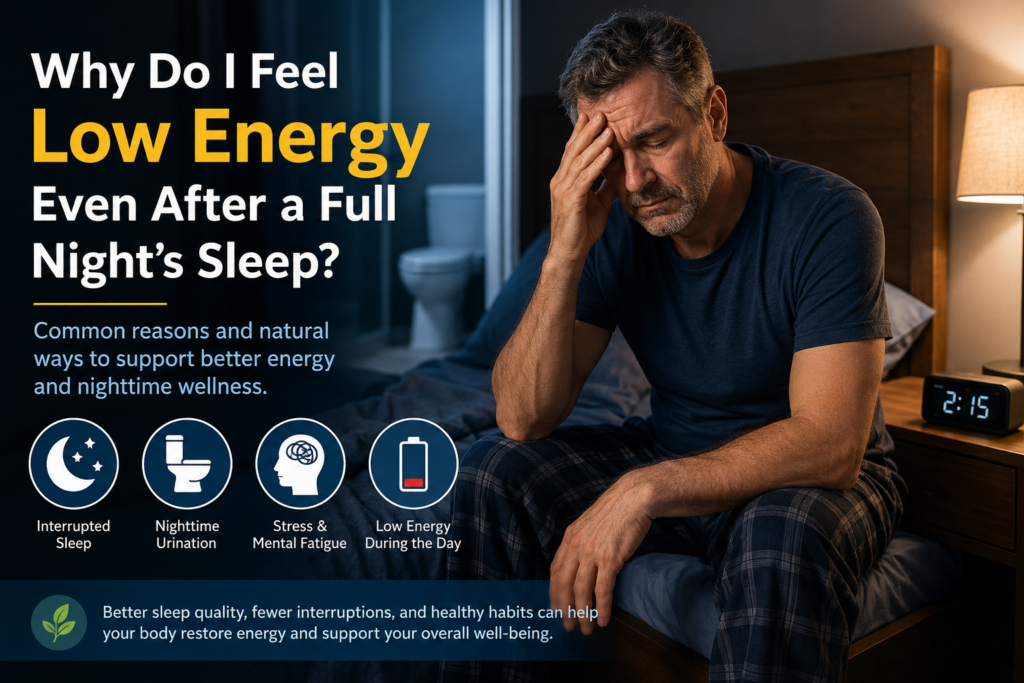
Common Reasons You Still Feel Tired After Sleeping
Poor Sleep Quality
Even if you sleep for a full night, your body may not be reaching deep restorative sleep consistently.
Sleep quality can be affected by:
- stress
- irregular sleep schedules
- excessive screen time before bed
- caffeine late in the day
- nighttime discomfort
When sleep becomes fragmented, the body may struggle to fully recharge overnight.
Nighttime Urination and Interrupted Sleep
Waking Up Multiple Times During the Night
One overlooked reason for low morning energy is interrupted sleep caused by nighttime urination.
Many men over 40 notice they:
- wake up once or several times to use the bathroom
- have difficulty falling back asleep
- feel less rested in the morning
Even small sleep interruptions can affect recovery, focus, and energy levels the next day.
Why Nighttime Wellness Matters
As the body changes with age, nighttime comfort may become more important for maintaining healthy sleep patterns.
Factors that may contribute include:
- evening hydration habits
- stress levels
- lifestyle habits
- bladder comfort
- prostate wellness changes associated with aging
Supporting nighttime wellness naturally may help improve overall sleep consistency.
Stress and Mental Fatigue
Your Brain May Not Fully “Shut Down”
Chronic stress can affect sleep recovery even when you technically sleep enough hours.
Many people experience:
- racing thoughts at night
- shallow sleep
- tension during sleep
- mental exhaustion during the day
This can leave the body feeling tired despite spending enough time in bed.
Lifestyle Habits That Can Affect Energy
Evening Habits Matter More Than Most People Think
Certain daily habits may reduce sleep quality without people realizing it.
These include:
- heavy meals late at night
- alcohol before bed
- inconsistent sleep schedules
- lack of physical activity
- too much caffeine during the afternoon or evening
Small changes to nighttime routines may sometimes help support better recovery and more stable daytime energy.
Natural Wellness Tips to Support Better Energy
Focus on Better Sleep Recovery
If you often wake up tired, these habits may help support better nighttime wellness:
Create a Consistent Sleep Schedule
Going to bed and waking up at the same time may help regulate your body clock.
Reduce Evening Stimulation
Try limiting:
- bright screens
- caffeine
- heavy meals late at night
Stay Active During the Day
Regular movement may help support healthier sleep patterns and daytime energy.
Support Nighttime Comfort
Many adults also focus on:
- hydration timing
- relaxation routines
- bladder and prostate wellness support
- healthier nighttime habits
Small wellness improvements can sometimes make a noticeable difference over time.
When Low Energy Shouldn’t Be Ignored
Persistent fatigue can sometimes be linked to underlying health conditions.
If low energy becomes severe, long-lasting, or affects daily life, speaking with a healthcare professional is important.
This article is for educational purposes only and is not medical advice.
Conclusion
Feeling low energy after a full night’s sleep is more common than many people realize. In many cases, the issue is not simply how long you sleep — but how well your body recovers during the night.
Interrupted sleep, nighttime urination, stress, and lifestyle habits can all play a role in daytime fatigue, especially for men over 40.
The good news is that improving nighttime wellness habits, sleep consistency, and overall recovery may help support better energy and more refreshed mornings over time.