

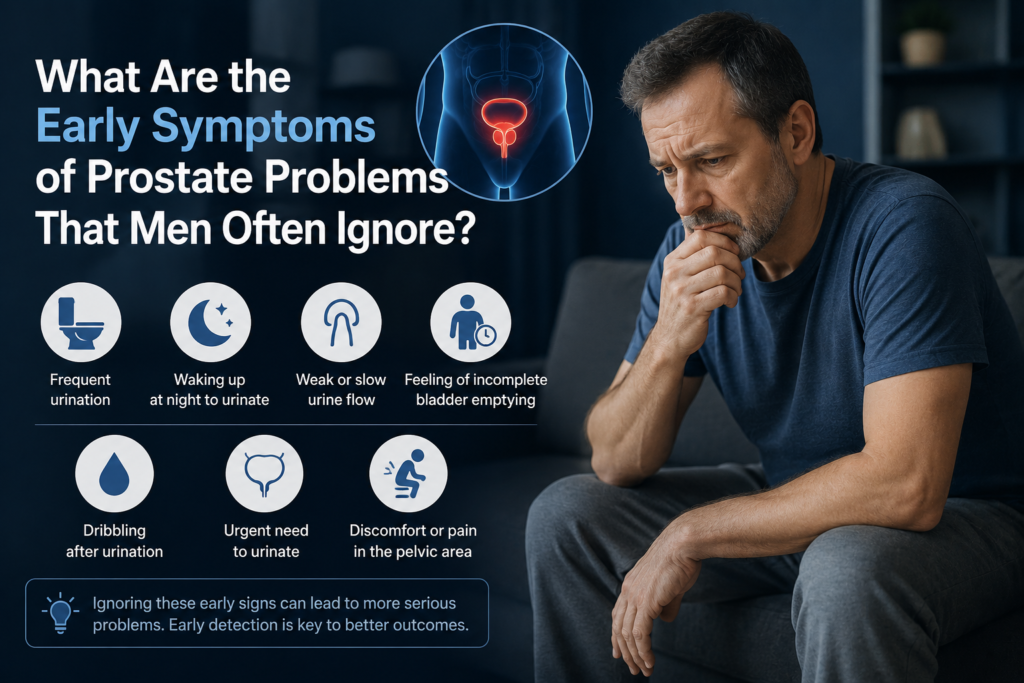
Many men ignore the early signs of prostate-related problems because the symptoms often appear gradually over time. In many cases, these changes may start with small nighttime discomforts or sleep interruptions that seem harmless at first.
However, paying attention to these early symptoms may help men better understand changes in their overall wellness and daily comfort.
Common Early Symptoms Men Often Overlook
1. Frequent Urination at Night
One of the most common early signs is waking up multiple times during the night to use the bathroom. Many men assume this is simply part of getting older, but repeated nighttime interruptions may affect sleep quality and energy levels.
2. Weak Urine Flow
Some men notice that urine flow becomes weaker or slower over time. This may happen gradually and can sometimes be ignored for months or even years.
3. Difficulty Fully Emptying the Bladder
A feeling that the bladder is not completely empty after urination is another common symptom men may overlook.
4. Interrupted Sleep and Fatigue
Frequent nighttime bathroom trips can lead to poor sleep quality, daytime tiredness, low focus, and reduced energy.
5. Increased Urgency
Some men experience a stronger or more sudden urge to urinate, especially during the evening or nighttime.
Why These Symptoms Are Often Ignored
Many prostate-related symptoms develop slowly, making them easy to dismiss as normal aging, stress, or temporary discomfort. Some men also avoid discussing urinary symptoms due to embarrassment or because the changes seem minor at first.
Can Lifestyle Habits Affect Symptoms?
Sleep quality, stress levels, hydration habits, diet, physical activity, and overall wellness may all influence how noticeable symptoms become over time.
Some men find that improving nighttime routines and supporting overall prostate and bladder wellness may help improve comfort and sleep quality naturally.
Final Thoughts
Early prostate-related symptoms are often subtle at first, but ongoing nighttime discomfort and sleep interruptions should not always be ignored.
Paying attention to healthy habits, stress management, sleep quality, and overall wellness may help support better nighttime comfort over time. If symptoms persist or worsen, speaking with a healthcare professional is important.